
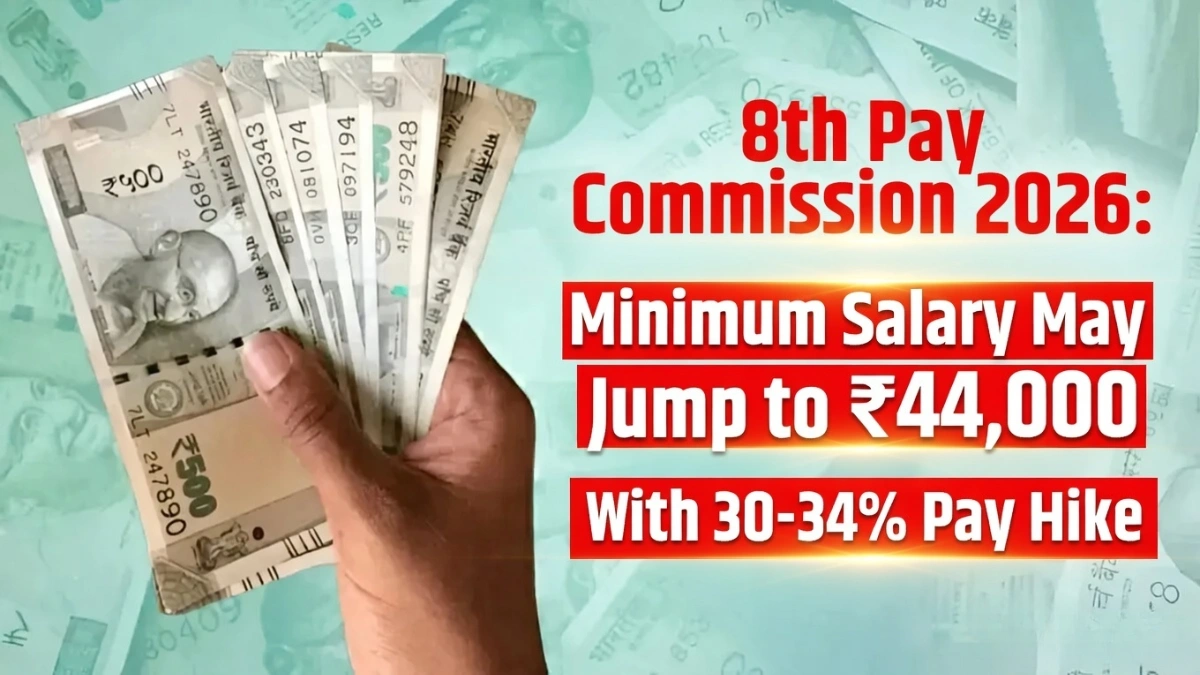
The discussion around the 8th Pay Commission has gained momentum in 2026 as government employees across India are expecting a major salary revision. According to various reports and estimates, the new pay commission could increase the minimum basic salary to around ₹44,000 while providing an overall salary hike of nearly 30 to 34 percent.
If implemented, the revision could benefit millions of central government employees and pensioners by improving their monthly income and adjusting pay structures according to inflation and rising living costs. The pay commission also brings attention to possible arrears payments that may be issued if the revised salary structure is applied retrospectively.
What Is the 8th Pay Commission
Pay commissions are typically established by the Government of India every ten years to review and revise the salary structures of central government employees and pensioners. The goal is to ensure that government salaries remain competitive and aligned with economic conditions.

The 7th Pay Commission was implemented in 2016, bringing major changes to salary structures, allowances, and pension benefits. With nearly a decade approaching since that revision, expectations are rising for the formation and implementation of the 8th Pay Commission.
Expected Minimum Salary Under the 8th Pay Commission
One of the most widely discussed projections is the possible increase in the minimum basic salary for government employees. Estimates suggest that the minimum basic pay could rise from the current ₹18,000 level to approximately ₹44,000.
This increase is based on expected changes in the fitment factor used to calculate new salary structures. The fitment factor determines how existing salaries are multiplied to arrive at revised pay levels. A higher fitment factor could significantly raise the base salary for employees across different pay grades.

Possible Salary Increase of 30–34 Percent
The 8th Pay Commission is expected to recommend a substantial salary revision for central government employees. Many estimates indicate that employees may see an increase of around 30 to 34 percent in their overall salary packages.
Such an increase would help offset inflation and rising living costs that have occurred over the past decade. The pay revision may also include updates to allowances such as house rent allowance, travel allowance, and other benefits.
| Pay Revision Factor | Expected Change |
|---|---|
| Minimum Basic Pay | Around ₹44,000 (estimated) |
| Salary Increase | Approximately 30–34 percent |
| Beneficiaries | Central government employees and pensioners |
| Previous Commission | 7th Pay Commission implemented in 2016 |
These estimates are based on discussions and projections, and the final figures will depend on official recommendations.

Arrears Possibility for Government Employees
Another topic of interest among employees is the possibility of arrears payments. If the 8th Pay Commission recommendations are implemented with retrospective effect, employees may receive arrears for the period between the effective date and the official implementation date.
Arrears could significantly increase the financial benefits for employees, as they would receive additional payments covering past salary differences. However, the government will decide whether arrears will be paid and how they will be calculated.
Impact on Pensioners
The implementation of a new pay commission typically benefits not only current employees but also pensioners. Pension calculations are often revised based on updated pay scales. If the minimum salary increases significantly, pension benefits for retired employees may also see upward adjustments. This could improve the financial security of millions of pensioners across the country.

When the 8th Pay Commission May Be Implemented
Although discussions about the 8th Pay Commission have intensified, the government has not yet announced an official implementation timeline. Traditionally, pay commissions are implemented roughly every ten years. If the same pattern continues, the next commission could be introduced around 2026 with implementation potentially taking place afterward depending on policy decisions.
Employees are closely watching government announcements for confirmation regarding the formation of the commission.
Conclusion
The 8th Pay Commission is expected to bring significant salary revisions for central government employees and pensioners. With projections suggesting a minimum salary of around ₹44,000 and an overall pay increase of up to 34 percent, the potential reforms could greatly improve financial stability for millions of workers.

However, final decisions regarding the pay commission, salary structure, and arrears will depend on official government announcements. Until then, employees continue to watch for updates regarding one of the most important salary reforms in the public sector.
Disclaimer: The salary figures and pay revisions mentioned are based on estimates and discussions. Final decisions will depend on official government notifications and recommendations from the pay commission.