
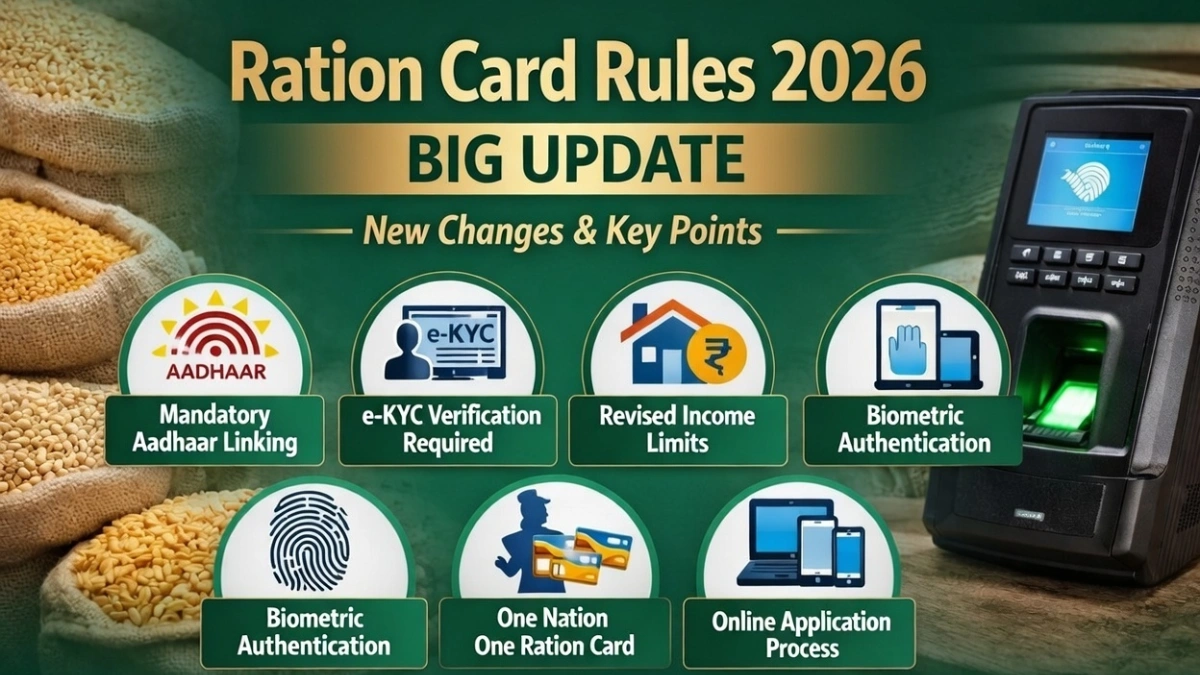
A major update in Ration Card rules for 2026 has created buzz across the country, especially among families dependent on subsidized food grains under the Public Distribution System. With stricter eligibility checks, mandatory e-KYC verification, and revised income limits, many households are now asking whether they still qualify.
If you or your family use a Ration Card for essential supplies, understanding these changes is critical. Here is a complete guide covering the new eligibility rules, income criteria, e-KYC process, and how to apply or update your card online in 2026.
What Has Changed in Ration Card Rules for 2026
The 2026 update focuses on transparency, digital verification, and removing ineligible beneficiaries from the system. Authorities have intensified data matching through Aadhaar linkage and income database verification. The goal is to ensure that only genuinely eligible families receive subsidized grains such as rice, wheat, and pulses. Governments are also emphasizing portability and digitization under the One Nation One Ration Card framework.
Beneficiaries who fail to complete required verification steps may face suspension or cancellation of their cards.

New Eligibility Criteria in 2026
Eligibility now depends on updated income thresholds, asset ownership, and household status. Families must meet specific income criteria defined by their respective state governments. Generally, households with stable high incomes, ownership of multiple vehicles, large residential properties, or government employment in certain categories may not qualify under Below Poverty Line or priority categories.
Priority households continue to include economically weaker families, daily wage workers, agricultural laborers, and socially vulnerable groups. Antyodaya Anna Yojana beneficiaries remain among the most protected categories under the scheme. Verification teams are actively reviewing beneficiary data to identify ineligible cardholders.
Revised Income Limits
Income limits vary by state, but the 2026 update has introduced stricter scrutiny. Urban and rural limits may differ, with rural households typically having slightly lower thresholds. Applicants must provide proof of income, including salary slips, income certificates, or self-declaration forms where applicable. Authorities may cross-check details with tax records and other databases to prevent misuse.
Families whose income has increased significantly beyond the prescribed limit may be required to surrender their Ration Cards voluntarily.

Mandatory e-KYC Process in 2026
One of the most important updates is the mandatory e-KYC process. Aadhaar-based biometric authentication is now required in most states to verify the identity of beneficiaries. Each family member listed on the Ration Card must complete Aadhaar seeding and biometric verification. This can typically be done at designated ration shops, Common Service Centers, or official government portals.
Failure to complete e-KYC within the prescribed deadline may result in temporary suspension of benefits. Once verification is complete, benefits continue without interruption.
How to Complete Ration Card e-KYC
The e-KYC process is designed to be simple but mandatory. Beneficiaries must visit the nearest ration dealer or authorized center with their Aadhaar number linked to their Ration Card. Biometric verification such as fingerprint authentication is performed to confirm identity. In some states, OTP-based verification linked to a registered mobile number is also available.
After successful verification, the status is updated in the system. Beneficiaries can check confirmation through the official food supply portal of their state.

Online Application and Update Process
The 2026 reforms also strengthen the online application process. New applicants can submit Ration Card requests through their state’s official food and civil supplies department portal. Applicants must upload required documents including Aadhaar details, proof of residence, income certificate, and passport-sized photographs. Once submitted, applications are reviewed by authorities before approval.
Existing cardholders can update family details, add new members, remove deceased members, or change address through the online portal in most states. Status tracking is available online, reducing the need for physical visits to government offices.
One Nation One Ration Card Advantage
Under the One Nation One Ration Card initiative, beneficiaries can now access their entitlements from any Fair Price Shop across India. This is particularly helpful for migrant workers and families relocating for employment.
Portability ensures that food security benefits continue uninterrupted even if beneficiaries move to another state.

Penalties for Ineligible Cardholders
Authorities have warned that ineligible beneficiaries may face cancellation of their Ration Cards if found violating income or asset criteria. In some cases, recovery of wrongly claimed benefits may be initiated.
Citizens whose financial status has improved beyond eligibility limits are encouraged to voluntarily surrender their cards to avoid penalties.
Why These Changes Matter in 2026
The 2026 update aims to ensure that subsidies reach those who genuinely need support. By strengthening verification processes and tightening eligibility criteria, authorities hope to reduce fraud and improve food security efficiency.
For eligible families, completing e-KYC and ensuring accurate documentation is the key to uninterrupted benefits.

Conclusion
The Ration Card Rules 2026 update introduces stricter eligibility checks, revised income limits, and mandatory e-KYC verification. Beneficiaries must complete Aadhaar-based authentication to continue receiving subsidized food grains.
Families should review their eligibility status, complete required verification steps, and use official online portals for applications or updates. Staying informed and compliant will ensure continued access to essential benefits under the Public Distribution System.
Disclaimer: This article is for informational purposes only. For exact eligibility criteria and deadlines, refer to your state government’s official food and civil supplies department notifications.