
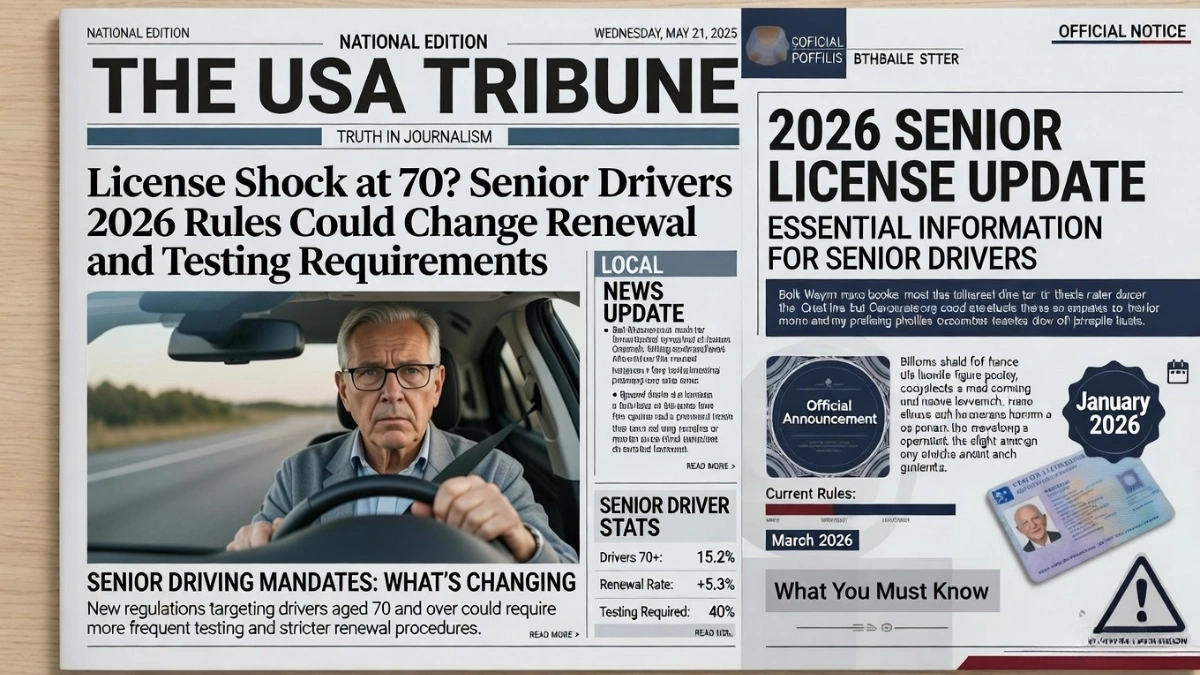
Concerns are rising among older motorists as updated Senior Drivers 2026 License Rules introduce tighter renewal standards in several regions. With road safety under renewed focus and aging populations growing worldwide, authorities are adjusting regulations for drivers aged 70 and above. While there is no automatic driving ban at 70, new procedures could significantly change how senior licenses are renewed, assessed, and monitored.
If you or a family member is approaching 70, understanding the updated rules is critical to avoid unexpected renewal delays or license suspensions.
Why Governments Are Updating Senior Driver Rules in 2026
Populations are aging, and a larger percentage of licensed drivers now fall into the senior category. While older drivers often have years of safe driving experience, health conditions such as reduced vision, slower reflexes, or cognitive decline can increase accident risks.
The 2026 updates aim to balance independence with safety. Rather than imposing blanket restrictions, authorities are introducing structured medical evaluations, shorter renewal cycles, and optional refresher courses.
Is There an Automatic License Cancellation at 70
One of the biggest misconceptions is that drivers automatically lose their license once they turn 70. In most jurisdictions, this is not true. Seniors can continue driving as long as they meet medical and competency standards.

However, the process to renew a license at 70 may now include additional steps compared to younger drivers.
New Renewal Frequency for Age 70 and Above
In many regions, license renewal cycles shorten once drivers reach 70. Instead of renewing every five or ten years, seniors may be required to renew every two to three years.
Below is a simplified comparison of renewal trends.
| Age Group | Renewal Period | Additional Requirements |
|---|---|---|
| Under 60 | 5 to 10 years | Standard process |
| 60 to 69 | 5 years | Vision screening in some cases |
| 70 and above | 2 to 3 years | Medical assessment and possible knowledge test |
Exact timelines vary depending on local transport authority rules.
Medical and Vision Assessments
A major part of the 2026 update focuses on medical fitness. Drivers aged 70 and above may need to submit a medical certificate from a licensed physician during renewal.

Vision tests are commonly required, as eyesight is critical for safe driving. In certain cases, doctors are obligated to report medical conditions that could impair driving ability. These assessments are not designed to remove licenses unfairly but to ensure road safety for all users.
Knowledge Tests and Refresher Programs
Some authorities now require seniors to complete short knowledge tests covering updated traffic rules. Others encourage participation in defensive driving courses. Refresher programs help older drivers adapt to new road signs, modern traffic systems, and advanced vehicle technologies.
Road tests are not automatically mandatory at 70 but may be required if concerns arise regarding driving ability.
Impact on Insurance Premiums
Insurance providers assess risk using multiple factors, including age and driving record. While premiums may increase slightly after 70, maintaining a clean record and completing safety courses can help offset higher costs.
Seniors who drive fewer kilometers annually may also qualify for low usage discounts in certain regions.

Technology Supporting Senior Drivers
Modern vehicles are equipped with advanced safety features such as automatic emergency braking, blind spot detection, lane departure alerts, and rear view cameras.
Authorities acknowledge that these technologies enhance senior driver safety. The 2026 rules encourage safe vehicle upgrades rather than imposing rigid driving restrictions.
When Can a License Be Suspended
Licenses may be suspended if a senior driver fails medical evaluations, accumulates serious traffic violations, or is deemed medically unfit.
However, most regions provide appeal mechanisms. Drivers can undergo reassessment or submit additional medical documentation to challenge suspension decisions.
Family Discussions and Responsibility
Family members often face difficult conversations about elderly loved ones driving. The 2026 updates encourage proactive health monitoring rather than sudden license withdrawal.
Open communication between seniors, families, and healthcare providers ensures smoother transitions if driving limitations become necessary.
How Seniors Can Prepare for Renewal
Schedule regular medical checkups
Maintain good vision care
Stay updated on traffic law changes
Consider refresher driving courses
Keep driving records clean
Taking these steps improves renewal outcomes and strengthens road safety confidence.
Why the 2026 Rules Matter
The updated framework does not remove independence from seniors but introduces accountability through periodic assessments. With structured medical and knowledge checks, authorities aim to reduce accident risk without unfairly targeting age alone.
For seniors who maintain good health and safe driving habits, continuing to drive beyond 70 remains possible and legally supported.
Conclusion
Senior Drivers 2026 License Rules introduce important adjustments for drivers aged 70 and above. Shorter renewal cycles, medical assessments, and knowledge checks form the core of the new framework. However, there is no automatic ban based solely on age. The goal is to balance personal mobility with public safety.
By staying informed, maintaining good health, and participating in refresher programs, seniors can confidently remain on the road while complying with updated regulations.
Disclaimer: Driving regulations vary by country and region. Readers should consult official transport authority guidelines for accurate and location specific information.