
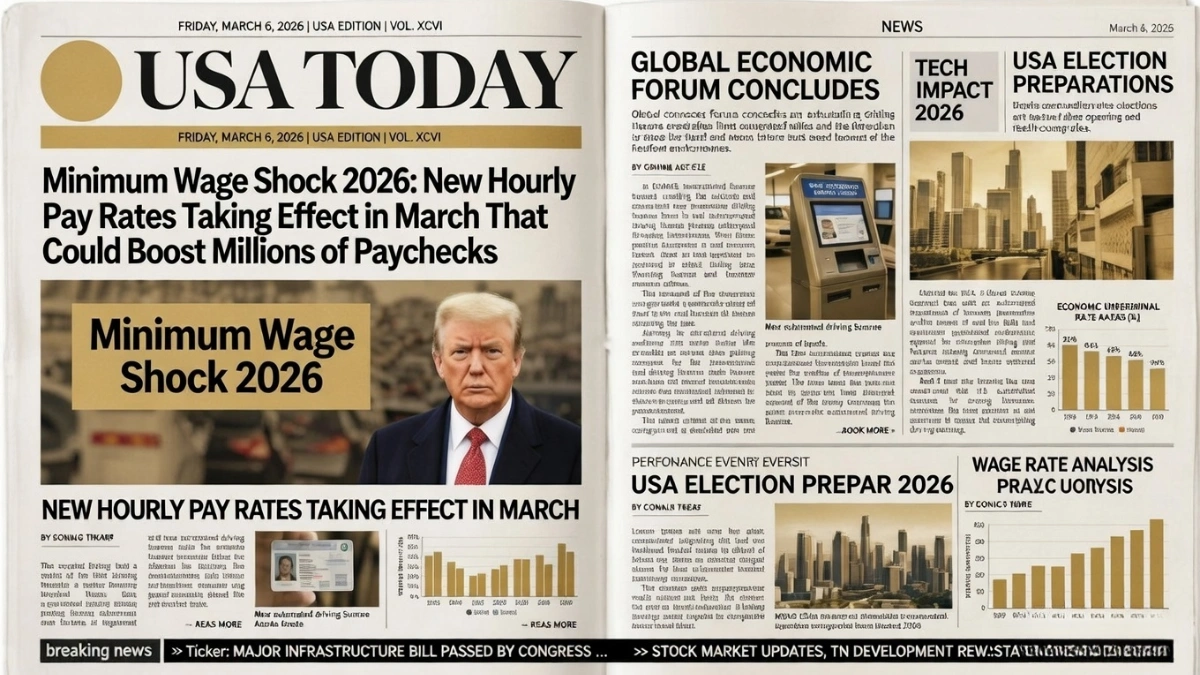
Across the United States, discussions about wage increases continue as several states and cities implement new minimum wage rates in 2026. Beginning in March 2026, many workers could see higher hourly pay as updated wage laws take effect. These increases are designed to help workers keep up with rising living costs and inflation while ensuring fair compensation across different industries.
Minimum wage laws in the United States are set at both federal and state levels. While the federal minimum wage has remained unchanged for several years, many states have chosen to introduce their own higher wage standards. As a result, millions of employees working in retail, hospitality, food service, and other sectors may benefit from higher hourly wages. Understanding how these wage increases work and which states are implementing new rates can help workers and employers prepare for the upcoming changes.
Why Minimum Wage Is Increasing in 2026
Minimum wage increases are often tied to inflation adjustments or long-term wage legislation passed by state governments. Some states use automatic formulas that raise wages annually based on the cost of living. These adjustments aim to help workers maintain purchasing power as prices for housing, food, and other essentials rise. Wage increases can also support economic growth by increasing consumer spending, which benefits local businesses.
In 2026, several states are continuing scheduled wage increases that were approved in previous years.

States Implementing Higher Minimum Wages
While the federal minimum wage remains at $7.25 per hour, many states have adopted significantly higher wage floors. These rates vary depending on state legislation and local economic conditions.
| State | Estimated Minimum Wage 2026 |
|---|---|
| California | Around $16.50 per hour |
| Washington | Around $16.28 per hour |
| New York | Around $16.00 per hour in some regions |
| Massachusetts | About $15.50 per hour |
| Florida | Around $14.00 per hour |
Exact wage rates may vary depending on region, employer size, and local laws.
Who Benefits Most From Wage Increases
Minimum wage increases primarily affect workers in entry-level and service industry jobs. Employees working in restaurants, retail stores, hotels, and customer service positions are among those most likely to see pay increases.
Younger workers and part-time employees may also benefit from higher hourly wages. For many workers, even a small increase in hourly pay can significantly improve monthly income. Employers may also need to adjust payroll structures to comply with updated wage laws.

How Wage Increases Affect Businesses
While wage increases can provide financial relief to workers, they may also create new challenges for employers. Businesses often need to adjust budgets, pricing strategies, and staffing plans to accommodate higher payroll costs.
However, higher wages can also lead to improved employee satisfaction, reduced turnover, and increased productivity. Some businesses find that better pay helps attract skilled workers in competitive labor markets. Balancing wage increases with business sustainability remains an important topic for policymakers and employers.
Key Factors That Determine Minimum Wage
Several factors influence minimum wage policies across different states.
• Cost of living and inflation levels
• Economic growth and employment trends
• State legislation and voter-approved initiatives
• Local labor market conditions
• Industry-specific wage standards
These factors help determine whether wage increases are necessary and how large the adjustments should be.
What Workers Should Expect in 2026
Workers in states with scheduled wage increases may notice higher hourly pay beginning in early 2026. Paychecks may increase depending on the number of hours worked each week. Employees should check their state’s labor department announcements to confirm the exact wage rate that applies to their location and job category.
Employers are generally required to update payroll systems to ensure that workers are paid according to the latest legal wage standards.
Conclusion
The 2026 minimum wage increases represent an important change for millions of American workers. As states continue adjusting wage policies to reflect economic conditions, many employees could benefit from higher hourly pay beginning in March 2026.

Although the federal minimum wage remains unchanged, state-level wage laws are playing a major role in shaping income levels across the country. Staying informed about these updates helps workers and businesses prepare for the new pay rates and understand how wage laws affect their financial planning.
Disclaimer: This article is for informational purposes only. Minimum wage rates vary by state and may change according to official labor department announcements.