
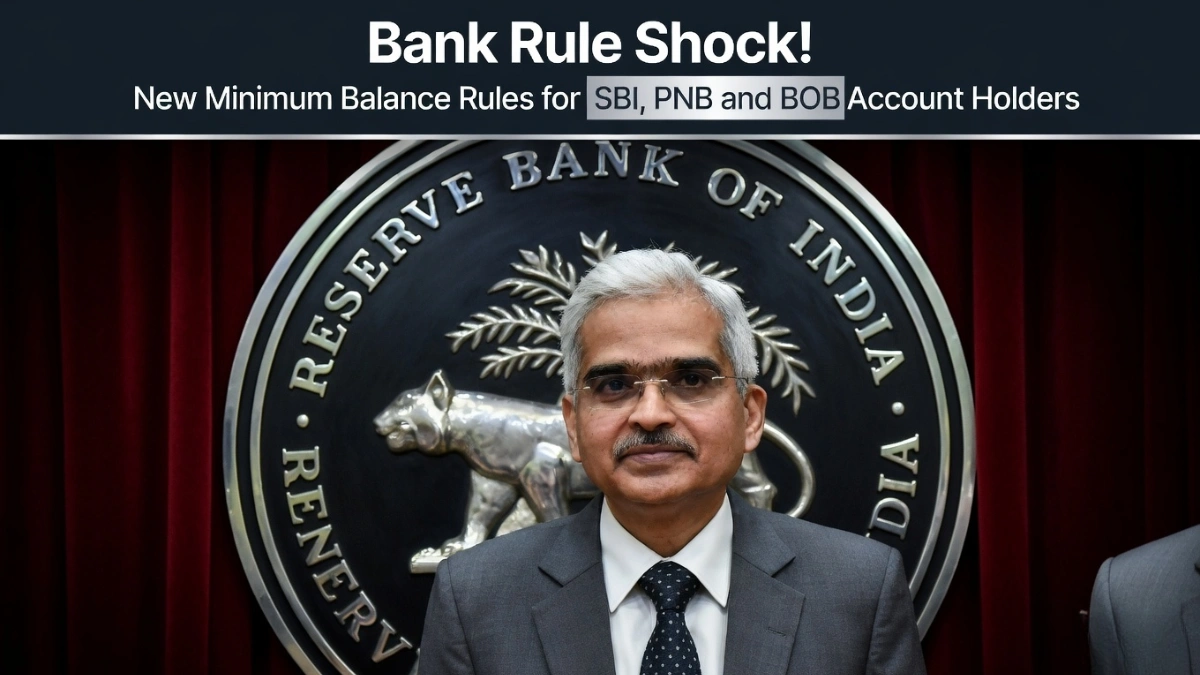
Bank customers across India are paying close attention to the latest updates regarding minimum balance requirements introduced by major public sector banks in March 2026. Leading banks such as State Bank of India (SBI), Punjab National Bank (PNB), and Bank of Baroda (BOB) periodically revise their banking policies, and these changes can directly affect millions of account holders.
The new minimum balance norms are designed to ensure smoother banking operations while encouraging customers to maintain adequate balances in their accounts. For many account holders, understanding these rules is important because failing to maintain the required balance can result in penalties or service charges.
What Is Minimum Balance in Bank Accounts
Minimum balance refers to the amount of money that account holders must maintain in their savings account at all times. Banks set this requirement to manage operational costs and maintain account activity.
If the balance in an account falls below the required minimum level, the bank may charge a penalty fee. These charges vary depending on the bank, account type, and location of the branch. Minimum balance requirements can also differ between metro, urban, semi-urban, and rural branches, which is why customers should check the specific rules applicable to their accounts.

Latest Minimum Balance Rules in Major Banks
The minimum balance requirement for savings accounts can vary based on account type and branch category. The following table provides an overview of the commonly expected balance requirements.
| Bank | Metro / Urban Branch | Semi-Urban Branch | Rural Branch |
|---|---|---|---|
| SBI | ₹3,000 | ₹2,000 | ₹1,000 |
| PNB | ₹2,000 – ₹3,000 | ₹1,000 – ₹2,000 | ₹500 – ₹1,000 |
| BOB | ₹2,000 – ₹3,000 | ₹1,000 – ₹2,000 | ₹500 – ₹1,000 |
These values may vary depending on specific account categories, so customers are advised to verify the exact requirements with their respective banks.
Why Banks Set Minimum Balance Requirements
Banks introduce minimum balance requirements for several reasons. Maintaining a certain balance helps banks cover administrative costs related to account maintenance, transaction processing, and digital banking services. It also encourages customers to keep their accounts active and ensures that banking services remain sustainable.
For customers, maintaining the required balance helps avoid penalty charges and ensures uninterrupted access to banking services such as debit cards, ATM withdrawals, and digital transactions.

Penalty Charges for Not Maintaining Minimum Balance
If an account holder fails to maintain the required minimum balance, banks may impose penalty charges. The penalty amount depends on how much the balance falls below the required level. Some banks apply a percentage-based charge, while others impose a fixed penalty amount. These charges are usually deducted automatically from the account.
Customers are therefore advised to regularly monitor their account balance to avoid unnecessary penalties.
Accounts That May Be Exempt from Minimum Balance
Certain categories of bank accounts may not require maintaining a minimum balance. Basic Savings Bank Deposit Accounts Government benefit accounts Student accounts Jan Dhan accounts These accounts are designed to promote financial inclusion and ensure that banking services remain accessible to all sections of society.
Customers who prefer accounts without minimum balance requirements may consider opening these types of accounts.

How Customers Can Avoid Penalties
To avoid minimum balance penalties, account holders can follow a few simple steps. Regularly check account balance through mobile banking or ATM services Maintain funds slightly above the required minimum level Set automatic alerts for low balance notifications Consider switching to zero balance accounts if available
By staying informed and monitoring their accounts regularly, customers can easily avoid unnecessary charges.
Importance of Staying Updated with Banking Rules
Banking regulations and policies can change periodically. Staying informed about these updates helps customers manage their accounts effectively. Understanding minimum balance requirements is particularly important because even small policy changes can affect millions of account holders. Banks usually communicate these updates through official websites, SMS alerts, and branch notifications.
Customers should therefore pay attention to official announcements to ensure compliance with the latest rules.

Conclusion
The March 2026 banking alert regarding minimum balance norms in SBI, PNB, and Bank of Baroda highlights the importance of staying informed about banking policies. Maintaining the required balance helps account holders avoid penalties and ensures uninterrupted access to banking services.
By understanding these rules and monitoring their account balances regularly, customers can manage their finances more efficiently and avoid unnecessary charges.For millions of bank account holders across India, awareness of such updates is essential for smooth banking operations.
Disclaimer: The information in this article is based on commonly reported banking policies and may vary depending on specific account types and branch categories. Customers should verify the latest rules directly with their respective banks.