
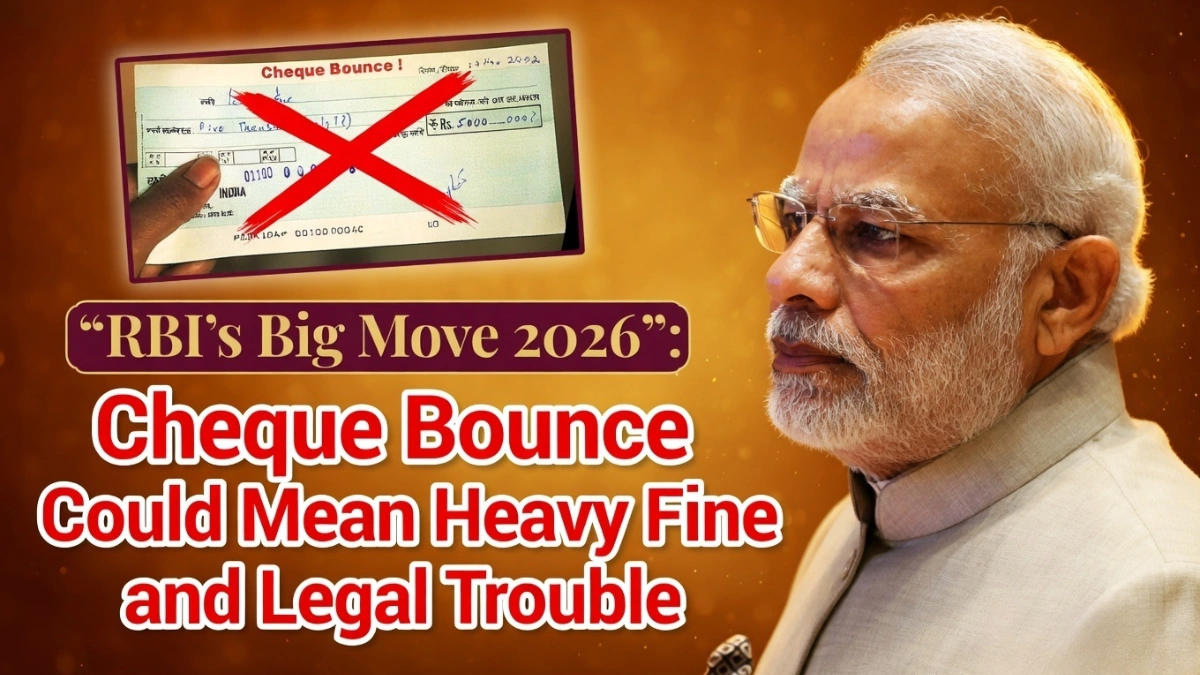
Cheque transactions remain an important part of the financial system in India, especially for business payments, property deals, and formal financial agreements. However, cheque bounce cases have been a major concern for banks, businesses, and customers for many years. In 2026, discussions around stricter enforcement and tighter banking compliance rules have brought renewed attention to the consequences of cheque bounce incidents.
Financial authorities and banking regulators have emphasized stronger action against cheque bounce violations to maintain trust in the banking system. The possibility of tougher penalties, higher fines, and even legal consequences has made account holders more cautious while issuing cheques. As a result, individuals and businesses are now being advised to understand the rules carefully before issuing any cheque.
Understanding What a Cheque Bounce Means
A cheque bounce occurs when a bank refuses to process a cheque presented for payment. This usually happens when there are insufficient funds in the issuer’s bank account or when the cheque contains errors that prevent it from being processed. When a cheque is returned unpaid, the bank issues a cheque return memo specifying the reason for the rejection. This document becomes important evidence if the issue proceeds to legal action.
Cheque bounce incidents are considered serious financial violations because they can disrupt transactions and cause financial losses to the recipient.

Common Reasons Why Cheques Bounce
Several factors can lead to cheque bounce situations. The most common reason is insufficient balance in the account from which the cheque was issued. When the available balance is lower than the cheque amount, the bank will not honor the payment. Another common cause is incorrect details on the cheque, such as mismatched signatures, overwriting, or errors in the date or payee name. Cheques may also bounce if the account is closed, frozen, or blocked by the bank.
Expired cheques, which are usually valid for three months from the date of issue, can also be rejected when presented after the validity period.
Legal Framework Governing Cheque Bounce Cases
In India, cheque bounce cases are governed primarily by the Negotiable Instruments Act, 1881. Under this law, issuing a cheque without sufficient funds can lead to legal action against the issuer. If a cheque is dishonored due to insufficient funds, the recipient can send a legal notice to the issuer demanding payment within a specific time period. If the payment is not made after receiving the notice, the recipient may file a case in court.
The law provides strong protection to the payee and treats cheque bounce as a punishable offense under certain circumstances.
Possible Penalties and Legal Consequences
Cheque bounce cases can lead to significant financial and legal consequences for the issuer. Courts may impose fines that can extend up to twice the amount of the cheque involved in the transaction. In addition to monetary penalties, the law also allows for imprisonment of up to two years in serious cases where the offense is proven.
Apart from legal penalties, cheque bounce incidents can also affect a person’s financial reputation. Frequent cheque bounce records may impact creditworthiness and banking relationships.
Banking Penalties and Charges
Banks also impose service charges when a cheque issued by an account holder is returned unpaid. These charges vary depending on the bank and the type of account. In many cases, both the issuer and the recipient may face certain processing charges from their respective banks.
Repeated cheque bounce incidents can also lead to stricter monitoring of an account by the bank. In extreme cases, banks may even restrict cheque facilities for customers with multiple violations.

Importance of Responsible Cheque Issuance
Issuing a cheque is considered a financial commitment. When a person signs and hands over a cheque, it implies that sufficient funds will be available in the account to honor the payment. Account holders should therefore always verify their account balance before issuing a cheque. Maintaining adequate funds in the account can help prevent cheque bounce incidents and avoid unnecessary penalties.
Properly filling out cheque details without errors is also important to ensure smooth processing.
Impact on Businesses and Financial Transactions
Cheque bounce cases can cause significant disruption in business transactions. When a cheque issued for payment is dishonored, it can delay payments, affect cash flow, and create disputes between parties. Businesses often rely on cheques for contractual payments, supplier settlements, and property transactions. For this reason, ensuring cheque reliability is essential for maintaining trust in commercial dealings.
Strict legal provisions help ensure that parties involved in financial transactions remain accountable.
Growing Focus on Digital Payments
As digital payment systems continue to expand, many individuals and businesses are gradually shifting away from cheque-based transactions. Online banking, UPI payments, and digital wallets offer faster and more secure payment options that reduce the risk of cheque bounce incidents.
However, cheques still remain widely used in certain sectors, which is why regulatory authorities continue to emphasize strict compliance with cheque payment rules.
Conclusion
The renewed focus on cheque bounce enforcement in 2026 highlights the importance of responsible financial behavior. With stricter monitoring, banking penalties, and legal consequences under existing laws, individuals and businesses must be cautious while issuing cheques.
Maintaining sufficient funds, verifying cheque details, and following proper banking practices can help prevent cheque bounce incidents and protect financial credibility. As financial systems continue to evolve, awareness of cheque payment rules remains essential for anyone using traditional banking instruments.

Disclaimer: This article provides general information about cheque bounce rules and legal provisions. Specific penalties and procedures may vary depending on the circumstances and official legal guidelines.