
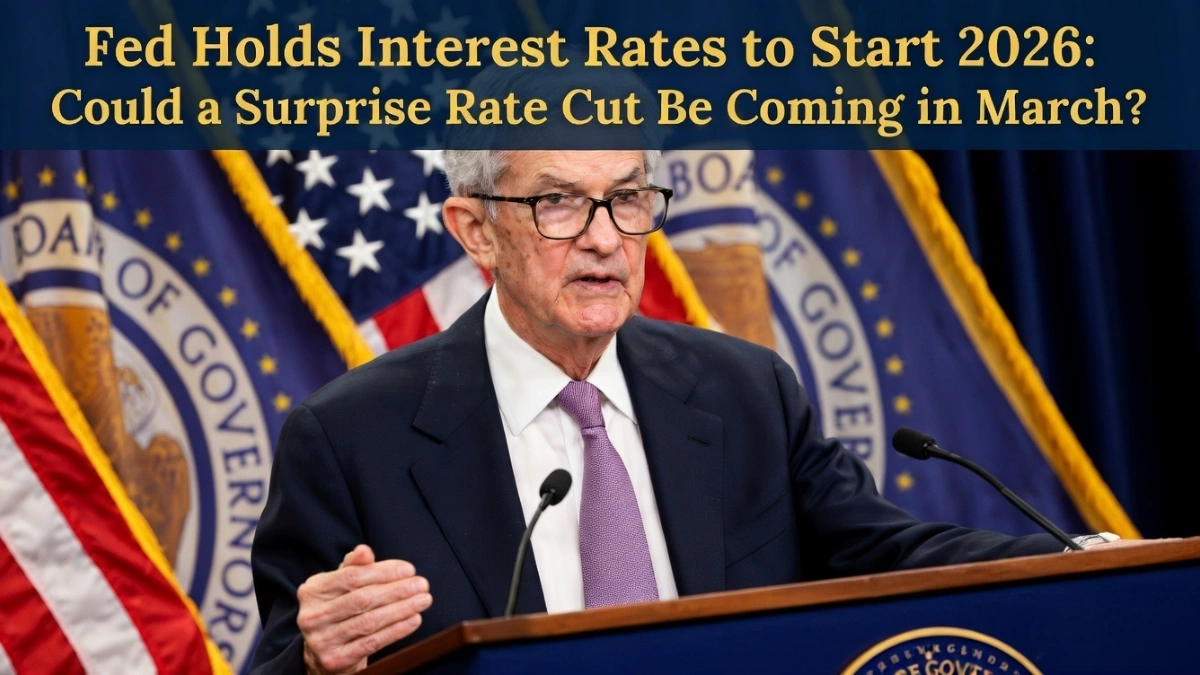
The U.S. Federal Reserve began 2026 by keeping its benchmark interest rates unchanged, a decision that immediately sparked debate among economists, investors, and consumers. While the central bank maintained its cautious stance, many market watchers are now asking a key question: could the Federal Reserve begin cutting rates as early as March 2026?
Interest rate decisions made by the Federal Reserve have a major impact on the broader economy. They influence mortgage rates, credit card interest, car loans, and business investment. With inflation slowly easing and economic growth showing mixed signals, the possibility of a rate cut has become a major topic of discussion in financial markets.
Why the Federal Reserve Left Rates Unchanged
The Federal Reserve’s primary responsibility is to maintain stable prices and support maximum employment. Over the past few years, the central bank raised interest rates aggressively to fight high inflation across the United States.
By early 2026, inflation had begun to cool compared to previous years, but policymakers remain cautious about cutting rates too soon. If interest rates are reduced prematurely, inflation could rise again and undermine the progress made so far. For this reason, the Fed decided to hold rates steady at the beginning of 2026 while monitoring economic data such as inflation, job growth, and consumer spending.
Current Federal Reserve Interest Rate Range
The federal funds rate remains within the same target range set in previous policy meetings. This rate serves as the benchmark for many other interest rates across the financial system.
| Policy Measure | Current Status 2026 |
|---|---|
| Federal Funds Rate | Approximately 5.25% – 5.50% |
| Policy Decision | Rates Held Steady |
| Inflation Trend | Gradually Cooling |
| Next Policy Meeting | March 2026 |
This range affects borrowing costs throughout the economy, influencing everything from home loans to corporate financing.

Why Markets Are Watching the March Meeting
Financial markets are closely watching the Federal Reserve’s March policy meeting because it could signal the beginning of a new phase in monetary policy. If inflation continues to slow and economic growth shows signs of weakening, the Fed may consider lowering interest rates to support economic activity. A rate cut could reduce borrowing costs for consumers and businesses, potentially boosting spending and investment.
However, policymakers have repeatedly stated that they want to see sustained evidence that inflation is under control before making any significant policy changes.
How a Rate Cut Could Affect Consumers
If the Federal Reserve decides to cut interest rates in the coming months, consumers could see several financial benefits. Lower interest rates often lead to reduced borrowing costs for mortgages, car loans, and personal loans.

Credit card interest rates could also gradually decline, helping households manage debt more easily. Businesses may benefit from cheaper financing as well, which can support hiring and expansion. On the other hand, savers may see slightly lower returns on savings accounts and certificates of deposit if interest rates begin to fall.
What Economists Are Predicting for 2026
Economic forecasts for 2026 remain mixed. Some analysts believe the Federal Reserve may begin cutting rates gradually if inflation continues to trend downward. Others believe policymakers will wait longer to ensure inflation remains under control.
Much will depend on upcoming economic data, including inflation reports, employment figures, and consumer spending trends. The Fed typically evaluates multiple indicators before making major policy decisions. For now, the central bank appears to be taking a cautious approach while keeping the possibility of future rate adjustments open.

Conclusion
The Federal Reserve’s decision to hold interest rates steady at the start of 2026 reflects its careful balancing act between controlling inflation and supporting economic growth. While no rate cuts have been announced yet, the upcoming March policy meeting could provide important signals about the direction of U.S. monetary policy.
Consumers, investors, and businesses will be watching closely to see whether economic conditions justify the first rate cut of the year. Until then, interest rates remain at their current levels as policymakers continue evaluating the strength of the economy.
Disclaimer: Economic forecasts and policy decisions may change based on new data and Federal Reserve announcements. This article is for informational purposes only.