
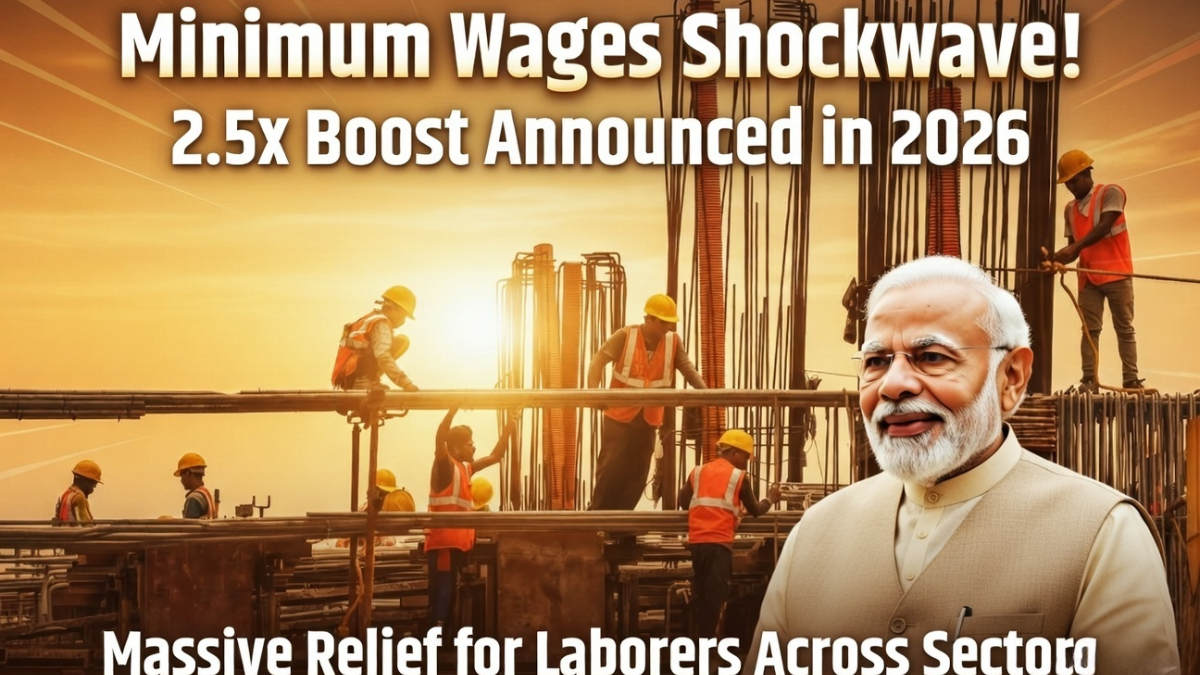
In a landmark move that could reshape income stability for millions of workers, a 2.5x minimum wages boost has been unveiled today, bringing major relief to laborers across multiple sectors. The Minimum Wages Hike 2026 is being described as one of the most significant wage revisions in recent years. With inflation, rising living costs, and increasing demand for skilled labor, the wage adjustment aims to strengthen the financial foundation of workers in both organized and unorganized sectors.
For daily wage earners, factory workers, construction laborers, and service sector employees, even moderate increments can make a meaningful difference. A 2.5 times increase, if implemented across categories, represents a transformative shift in monthly income levels.
What the 2.5x Minimum Wage Boost Means
The 2.5x boost indicates a substantial upward revision in the base minimum wage rate. If a worker was previously earning a defined minimum daily wage, the revised structure significantly increases that amount under the new 2026 framework.
For example, if the earlier minimum wage was 400 per day in a particular category, a 2.5x revision could raise it substantially, leading to a sharp improvement in monthly earnings. Over a 26-day working month, this could translate into thousands of additional income for labor households.
This move is expected to impact unskilled, semi-skilled, and skilled categories differently, depending on sector classification and regional cost-of-living adjustments.
Why the Wage Hike Was Necessary
Several economic factors led to this decision. Rising food prices, fuel costs, housing expenses, and healthcare inflation have reduced the real purchasing power of low-income workers. Many laborers struggled to manage household budgets under previous wage structures.
Governments periodically revise minimum wages to reflect changes in the Consumer Price Index and cost-of-living indicators. The 2026 revision appears to acknowledge that incremental increases were no longer sufficient to support worker livelihoods.
The push for wage revision was also influenced by labor unions and worker advocacy groups who argued that wage adjustments must keep pace with economic realities.
Who Will Benefit the Most
The minimum wage hike is expected to benefit construction workers, factory laborers, agricultural workers, sanitation staff, transport helpers, and various service sector employees. Informal sector workers, who rely on daily wages, stand to gain immediate financial relief.
Small contractors and industrial employers will need to align their payroll systems with revised rates. Workers previously earning at or near minimum thresholds will see the most noticeable impact.
The wage hike could also have a positive effect on household consumption, as increased income may boost local spending in rural and urban markets.
Sector-Wise Implications
Different sectors may experience varied financial adjustments under the 2026 wage framework. Construction and infrastructure projects, which employ large volumes of labor, may see a noticeable increase in operational costs.
Manufacturing units and industrial zones will likely recalibrate production budgets to absorb higher wage expenses. However, improved worker income may lead to better morale, productivity, and reduced labor turnover.
Agricultural laborers may also benefit, depending on state-level adoption and local wage board approvals.
Regional Variations in Implementation
Minimum wages are often determined at state levels, which means the final implemented rates may vary regionally. States with higher living costs may already have elevated wage structures, while others may adjust gradually.
Urban centers and metropolitan areas typically see higher minimum wage rates compared to rural districts. Therefore, the 2.5x boost may translate differently depending on geographic location.
Workers are advised to check official labor department notifications in their respective states to confirm applicable rates.
Impact on Employers and Industry
While the wage hike brings relief to laborers, employers must adjust to higher wage bills. Small and medium enterprises may experience short-term financial pressure as payroll expenses increase.
However, economists suggest that higher wages can stimulate economic activity. Increased disposable income among workers can drive consumption, boosting demand for goods and services.
Balancing labor welfare with business sustainability will be crucial in the months ahead.
Long-Term Economic Outlook
In the long term, stronger wage standards can contribute to reduced income inequality and improved quality of life for low-income households. Better wages can enhance access to education, healthcare, and housing.
If implemented effectively, the Minimum Wages Hike 2026 could strengthen domestic demand and support economic growth. However, careful monitoring will be necessary to ensure compliance and prevent informal underpayment.
Government authorities are expected to conduct inspections and enforce compliance to ensure workers receive the revised wages.
What Workers Should Do Now
Laborers should verify updated wage notifications issued by local labor departments. If employers fail to implement the revised rates, workers may approach labor authorities for clarification or grievance redressal.
Maintaining employment records, payment receipts, and wage slips will help ensure transparency and legal compliance.
Awareness plays a critical role in ensuring that workers receive the benefits of revised wage structures.
Conclusion
The 2.5x Minimum Wages Hike 2026 marks a potentially historic shift in labor income policy. For millions of workers, this update promises stronger financial security and relief amid rising living costs.
While implementation details may vary by state and sector, the announcement reflects a broader commitment to labor welfare. As industries adjust to the new wage environment, the coming months will reveal the full economic impact of this significant policy shift.
Disclaimer: This article provides general information based on current updates and economic trends. Final wage rates and implementation details will depend on official state and central government notifications.