
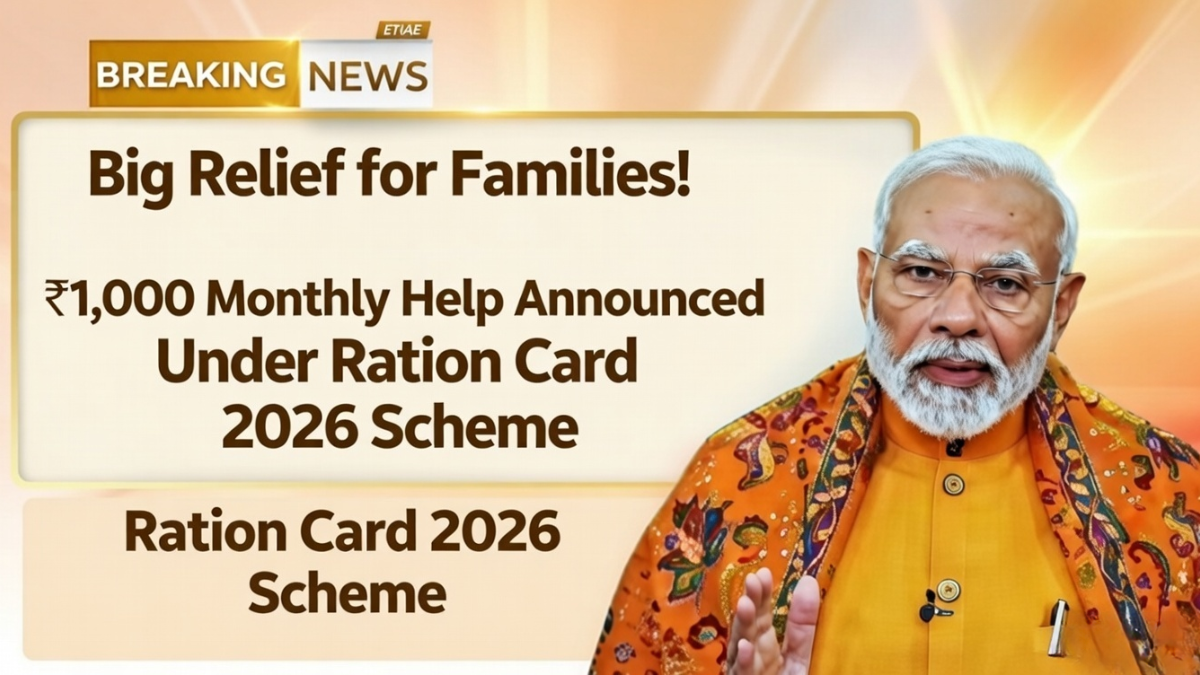
In a significant development aimed at supporting low-income households, the Ration Card 2026 Scheme has introduced a provision for ₹1,000 monthly financial assistance for eligible beneficiaries. Today’s update has created widespread interest among ration card holders, especially families struggling with rising food and household expenses.
The move is being seen as an extension of welfare support under food security and social assistance programs. With inflation affecting grocery bills, fuel costs, and daily essentials, the additional monthly help could provide meaningful relief to millions of households across the country.
The ₹1,000 assistance is expected to be transferred directly to beneficiaries’ bank accounts through Direct Benefit Transfer mechanisms, ensuring transparency and timely support.
What Is the ₹1,000 Monthly Help Under Ration Card 2026 Scheme
The ₹1,000 monthly help is a financial support initiative linked to eligible ration card holders. The scheme aims to provide additional assistance beyond subsidized food grains already available under public distribution systems.
Under this framework, families holding valid ration cards and meeting income criteria may receive ₹1,000 per month as supplementary support. This amount can help cover essential expenses such as food, cooking fuel, school supplies, and other household necessities.
The assistance is particularly targeted at economically weaker sections, including daily wage earners, rural households, and urban low-income families.
Who Is Eligible for the Scheme
Eligibility depends on several factors, including income status, type of ration card, and household details. Generally, beneficiaries must hold a valid ration card categorized under priority or economically weaker sections.
Families must meet income thresholds defined by state authorities. In many cases, Below Poverty Line and Antyodaya category cardholders are prioritized.
Additionally, Aadhaar linking and bank account verification may be mandatory to receive direct transfers. Households with government employees or high taxable income are typically excluded from such welfare benefits.
Beneficiaries are advised to check their eligibility status through official ration card portals or local distribution offices.
How the Financial Assistance Will Be Provided
The ₹1,000 monthly support is expected to be credited directly into the registered bank account linked with the ration card and Aadhaar details. Direct Benefit Transfer ensures minimal leakage and timely payment.
Beneficiaries may receive SMS notifications once the amount is credited. It is important to ensure that bank account details and Aadhaar linkage are accurate to avoid delays.
In some states, phased implementation may occur, meaning payments may begin in selected districts before full statewide rollout.
Why This Update Is Important in 2026
With rising food prices and increasing household expenses, low-income families face significant financial pressure. While subsidized food grains reduce grocery costs, additional cash support offers flexibility in managing other essential expenses.
The ₹1,000 monthly help can provide stable supplementary income for families relying on daily wages. Even modest monthly support can accumulate into meaningful yearly assistance, helping households improve financial resilience.
The scheme also strengthens social welfare frameworks by combining food security with direct income assistance.
Impact on Rural and Urban Households
In rural areas, where agricultural incomes may fluctuate seasonally, the scheme can provide consistent financial backup. Urban low-income families dealing with rent, transport, and utility expenses may also benefit significantly.
Women-headed households and elderly beneficiaries are likely to experience additional relief if they qualify under the eligibility criteria.
The predictable monthly assistance can help families plan expenses more efficiently and avoid debt during emergencies.
How to Check Your Status
Ration card holders should verify whether their card details are updated and linked with Aadhaar. Online portals managed by state food and civil supplies departments allow beneficiaries to check their status using ration card numbers.
If eligibility appears unclear or payments are delayed, beneficiaries can approach local ration offices or authorized centers for clarification.
Keeping mobile numbers and bank details updated is essential to ensure uninterrupted assistance.
Common Reasons for Payment Delays
Payments may be delayed if Aadhaar is not linked properly, bank account details are incorrect, or household income verification is pending. Duplicate records or documentation errors can also affect disbursement.
To avoid complications, beneficiaries should review their details proactively and correct discrepancies at the earliest opportunity.
What Beneficiaries Should Do Now
Eligible families should confirm that their ration card category is active and properly registered. Ensure Aadhaar and bank account details are correctly linked.
Stay updated through official announcements rather than relying on social media rumors. Verify information from authorized government portals or local offices.
Proactive verification can prevent last-minute issues once disbursement begins.
Conclusion
The Ration Card 2026 Scheme update introducing ₹1,000 monthly assistance marks a meaningful step toward strengthening financial support for economically vulnerable households. Combined with subsidized food distribution, this additional cash benefit can ease the burden of rising living costs.
While implementation details may vary across states, ensuring eligibility compliance and updated records will help beneficiaries receive timely support. For many families, this monthly assistance could make a significant difference in managing essential expenses throughout 2026.
Disclaimer: This article provides general information based on current welfare update discussions. Final eligibility criteria and payment details will depend on official state and central government notifications.