
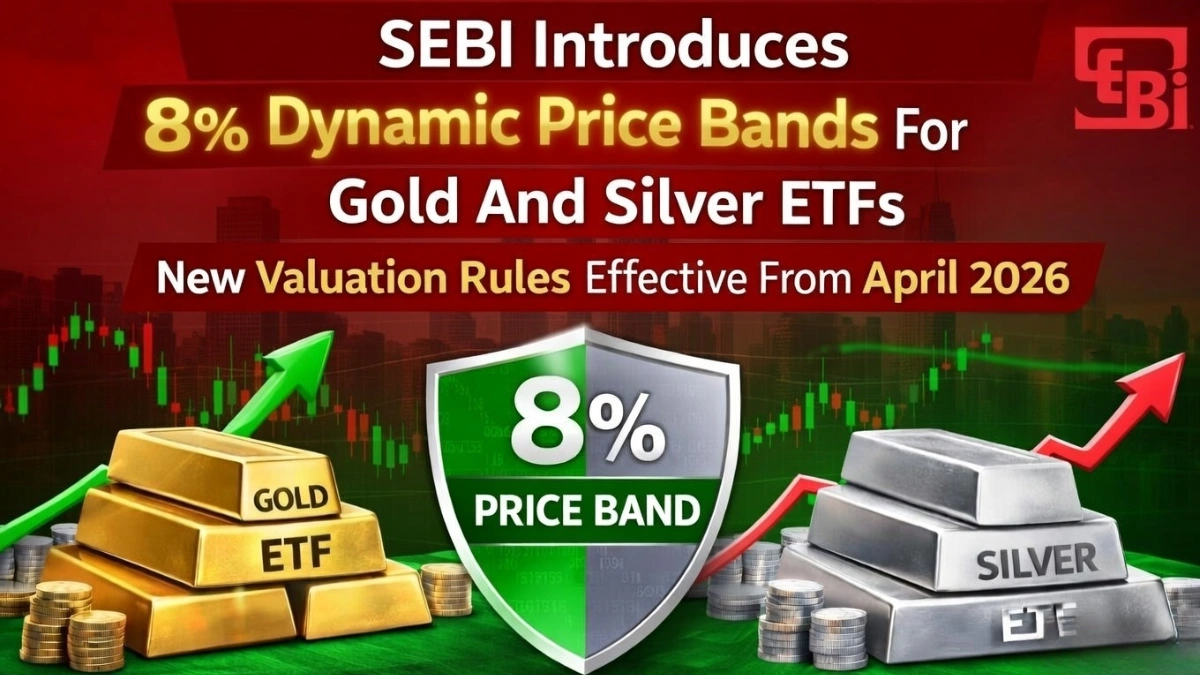
India’s capital markets regulator, the Securities and Exchange Board of India (SEBI), has announced important regulatory changes that will directly impact Gold and Silver Exchange Traded Funds (ETFs). Starting from April 2026, SEBI will implement a 6 percent dynamic price band system along with new valuation rules for these commodity-based ETFs.
The move is aimed at improving price stability, reducing excessive volatility, and strengthening transparency in the valuation process of precious metal ETFs. Investors who trade Gold and Silver ETFs should understand how these new rules may affect trading activity, pricing, and fund valuation in the coming months.
Why SEBI Introduced Dynamic Price Bands
Gold and Silver ETFs are widely traded investment instruments that allow investors to gain exposure to precious metals without physically purchasing them. However, these ETFs sometimes experience sudden price fluctuations due to changes in global commodity prices, currency movements, and market speculation.

To reduce abnormal price swings, SEBI has introduced a 6 percent dynamic price band. This rule will limit how much the ETF price can move within a trading session relative to its reference price. The objective is to maintain orderly market conditions and protect investors from extreme price movements that may occur during volatile trading periods.
What the 6 Percent Dynamic Price Band Means
Under the new regulation, Gold and Silver ETFs will be allowed to move only within a defined price range during a trading day. If prices attempt to move beyond the permitted band, trading restrictions may temporarily apply until prices stabilize. This mechanism is designed to create a more controlled trading environment while still allowing market driven price discovery.
• Maximum intraday movement allowed will be 6 percent from the reference price
• The rule will apply to both Gold ETFs and Silver ETFs
• The system will help reduce extreme volatility during trading hours
• Exchanges may review or adjust reference prices based on market conditions

These bands are dynamic, meaning they can adjust as the reference price changes during trading sessions.
New Valuation Rules for Precious Metal ETFs
Along with price bands, SEBI has also introduced updated valuation rules for Gold and Silver ETFs. These rules are meant to improve accuracy in determining the net asset value of ETF units.
ETF valuations will now more closely track the underlying price of gold and silver in international markets. Fund houses will need to follow updated pricing benchmarks and valuation methodologies approved by regulators. These changes aim to ensure that ETF prices remain aligned with the real value of the underlying commodities.

Key Changes Taking Effect From April 2026
| Regulation Update | Details |
|---|---|
| Dynamic Price Band | 6 percent limit on intraday price movement |
| Asset Coverage | Applies to Gold ETFs and Silver ETFs |
| Implementation Date | April 2026 |
| Valuation Rules | Updated methodology for NAV calculation |
| Objective | Reduce volatility and improve price transparency |
These changes are expected to enhance investor confidence in commodity based exchange traded funds.
Impact on Investors and ETF Trading
For investors, the new rules may help reduce sudden price spikes or crashes in Gold and Silver ETFs. This could make ETF trading more stable, especially during periods of global commodity price volatility. However, traders who rely on short term price movements may notice tighter trading ranges due to the price band limits.
Long term investors are unlikely to be significantly affected since ETF prices will continue to reflect underlying gold and silver values over time. The updated valuation rules may also improve transparency by ensuring ETF net asset values accurately represent market prices of the underlying metals.

Why These Changes Matter for the Indian Market
India is one of the largest consumers of gold globally, and investment demand for precious metals continues to grow. Gold ETFs have become a popular alternative to physical gold, offering liquidity and convenience for investors.
By introducing stricter trading rules and valuation standards, SEBI aims to strengthen market integrity and ensure that ETF prices remain fair and transparent. These measures also align with broader regulatory efforts to improve investor protection and maintain orderly financial markets.
Conclusion
SEBI’s decision to introduce a 6 percent dynamic price band and updated valuation rules for Gold and Silver ETFs marks an important regulatory development for India’s financial markets. Starting from April 2026, these changes will aim to control excessive price volatility while ensuring ETF valuations remain closely linked to global precious metal prices.

Investors trading commodity ETFs should familiarize themselves with the new rules, as they may influence how prices move during trading sessions and how fund values are calculated.
Disclaimer: This article is for informational purposes only and should not be considered financial advice. Investors should consult financial professionals before making investment decisions.