
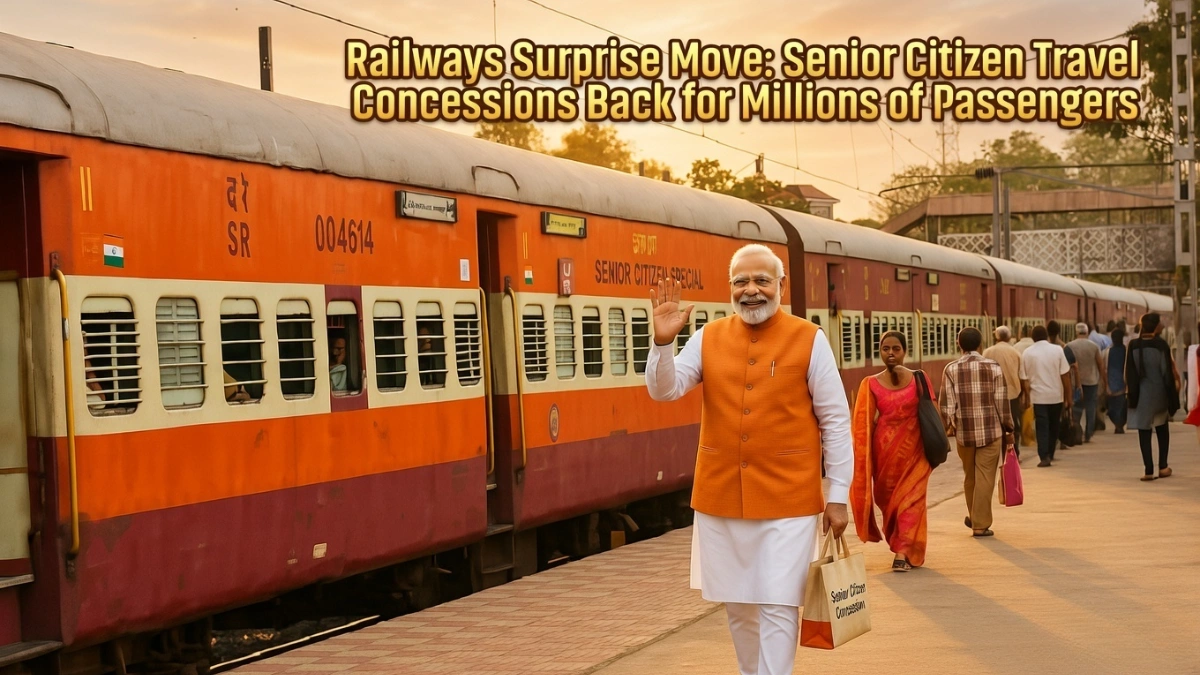
Millions of senior citizens across the country have received encouraging news as discussions around restoring rail travel concessions for elderly passengers have once again gained attention. For many years, discounted railway tickets helped older citizens travel affordably across India for personal, medical, and family purposes.
Rail travel has always been one of the most widely used transportation options in the country. Because of this, concessions for senior citizens played an important role in reducing travel expenses for retirees and elderly passengers who often depend on fixed incomes. The possibility of restoring these concessions has therefore brought renewed hope and excitement among senior citizens. If implemented widely, the decision could benefit millions of elderly passengers who rely on trains for long-distance travel.
Background of Senior Citizen Rail Concessions
For decades, the railway concession scheme allowed senior citizens to receive discounted fares on train tickets. Typically, men aged 60 years and above and women aged 58 years and above were eligible for the concession. Under the previous policy, senior male passengers could receive around 40 percent discount on ticket fares, while senior female passengers could receive up to 50 percent discount.
These concessions were especially beneficial for retirees who often needed to travel for medical treatment, family visits, or religious pilgrimages. However, the concession program was suspended during the COVID-19 pandemic, and it has remained a topic of discussion ever since.

Why the Concessions Were Important
Senior citizen railway concessions were not just a financial benefit but also a social support system for elderly citizens. Many retired individuals depend on pensions or savings for their daily expenses. Transportation costs can therefore become a burden, especially when long-distance travel is required.
Rail concessions helped reduce this financial pressure and allowed elderly passengers to travel more comfortably without worrying about high ticket prices. The scheme also encouraged senior citizens to remain socially active by visiting relatives, attending social gatherings, and participating in religious or cultural events.
Possible Restoration of the Scheme
Recent discussions and policy debates have raised the possibility of bringing back railway concessions for senior citizens. While final decisions depend on government approval and financial considerations, there are strong indications that authorities are evaluating options to support elderly passengers once again.
Some proposals suggest partial restoration of concessions, while others recommend targeted benefits for economically weaker senior citizens. If approved, the policy could significantly reduce travel expenses for millions of elderly passengers.

Expected Eligibility Criteria
If the concession scheme is restored, eligibility rules may remain similar to the earlier system. Passengers must meet certain age requirements and provide valid identification while booking tickets.
Senior citizens may be required to verify their age through government documents such as Aadhaar cards or other identification proofs. Railway booking systems could also include an option to select concession benefits while purchasing tickets online or at railway counters. These measures would ensure that the benefits reach the intended group of passengers.
Benefits for Senior Citizens
Restoring rail concessions could provide several advantages for elderly passengers.
Lower travel expenses
Greater mobility for retirees
Easier access to healthcare travel
Support for religious and family visits
Improved financial relief for pensioners

These benefits could significantly improve the quality of life for older citizens who depend heavily on affordable public transport.
Impact on Rail Travel
The return of concessions may also encourage more senior citizens to travel by train again. This could increase passenger demand, especially for long-distance routes.
Indian Railways has always been one of the most accessible and affordable travel options for the public. Offering concessions to senior citizens reinforces the railway’s role as a socially inclusive transportation system. It also reflects the government’s commitment to supporting elderly citizens through welfare policies.
Concerns and Financial Considerations
While restoring concessions provides major relief for senior citizens, it also involves financial implications for the railway system. Authorities must balance social welfare objectives with operational costs. During the pandemic years, the suspension of concessions helped reduce financial pressure on railway services.

If concessions return, policymakers may consider revised models to ensure that the scheme remains financially sustainable. For example, targeted concessions or limited quota systems may be introduced.
Public Response and Expectations
The possibility of restoring railway concessions has generated strong public support. Senior citizens and social organizations have welcomed the discussion, emphasizing the importance of affordable travel for elderly passengers.
Many people believe that such benefits reflect respect and support for older citizens who have contributed to the country throughout their working lives. As discussions continue, millions of senior citizens are eagerly waiting for an official announcement.
Conclusion
The potential restoration of rail travel concessions for senior citizens could bring significant relief to millions of elderly passengers across the country. Affordable transportation plays a crucial role in maintaining mobility, independence, and social connection for older citizens.

If the concession scheme is officially reinstated, it will not only reduce travel expenses but also improve accessibility for retirees who depend on railway services. The decision will likely be welcomed widely, as it represents an important step toward supporting the welfare and dignity of senior citizens.
Disclaimer: This article is based on ongoing discussions and reports regarding possible policy updates. Official announcements and final rules may vary depending on government decisions.