
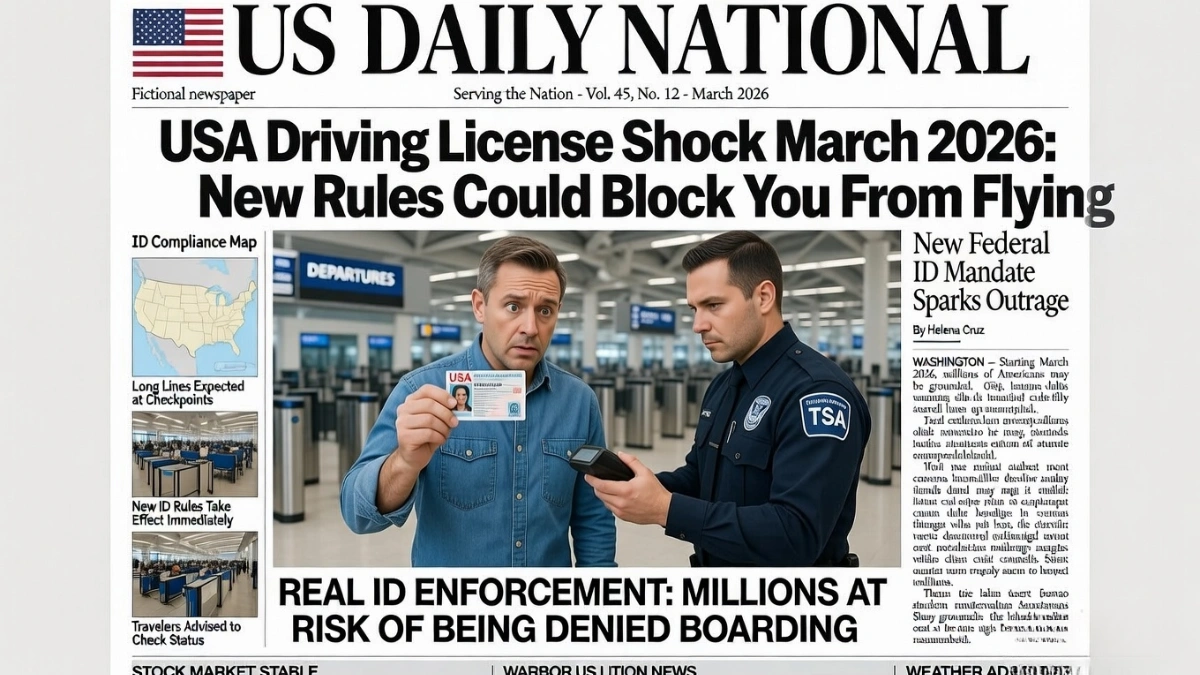
Millions of drivers across the United States are heading into March 2026 with major driving license changes coming into effect. From updated identification requirements to stricter renewal rules and federal enforcement deadlines, these updates could directly impact how Americans renew, replace, or use their licenses for travel and identification. If you are unaware of the new rules, you risk delays, rejected applications, or even restrictions on domestic air travel.
Here is a detailed breakdown of what is changing in March 2026 and what drivers must do immediately to avoid disruption.
REAL ID Enforcement Is Now Fully Active
The biggest nationwide shift revolves around the enforcement of the REAL ID requirement under the Department of Homeland Security. Beginning in 2026, federally compliant REAL ID driver’s licenses are required for boarding domestic flights and accessing certain federal facilities.
A standard state driver’s license that is not REAL ID compliant may no longer be accepted for these purposes. Drivers must check whether their current license has the REAL ID star marking. If not, an upgrade will be required.

Applicants upgrading to REAL ID must typically provide proof of identity, Social Security number, lawful status, and two proofs of residency. This stricter documentation process has already led to appointment backlogs in several states.
State Level Renewal and Testing Updates
In addition to federal compliance changes, several states are implementing updated renewal procedures in March 2026. Many Departments of Motor Vehicles are tightening identity verification processes and expanding online renewal eligibility criteria.
Drivers over certain age thresholds may face updated vision screening requirements. Some states are also revising written test requirements for expired licenses beyond a specific grace period. These updates aim to improve road safety and prevent identity fraud, but they may create longer processing times.
Because driver’s license laws are state specific, motorists should verify the latest information with their local DMV before scheduling appointments.

Digital Driver’s Licenses Expansion
March 2026 is also seeing expanded adoption of digital driver’s licenses in select states. These mobile based licenses allow drivers to store identification credentials securely on smartphones. While digital licenses are becoming more widely accepted for certain verifications, they do not replace physical licenses in all situations.
Airports, law enforcement agencies, and businesses may still require a physical card in some jurisdictions. Drivers should confirm whether digital IDs are fully accepted in their state before relying solely on mobile credentials.
Stricter Penalties for Expired Licenses
Another major update involves enforcement policies for expired licenses. Law enforcement agencies are tightening grace period rules that were previously relaxed during earlier administrative backlogs. In some states, drivers with significantly expired licenses may now be required to retake written or road tests.
This change means procrastinating renewals could result in additional steps, fees, or testing requirements. Scheduling renewals ahead of expiration dates is now more important than ever.

Updated Fees and Processing Timelines
Many states are adjusting license processing fees in 2026 to reflect administrative costs and enhanced security measures. While increases vary by state, applicants may notice slightly higher charges for REAL ID upgrades, duplicate cards, or expedited processing.
Processing times may also extend during peak demand periods as more residents rush to comply with new documentation standards. Booking appointments early is strongly recommended to avoid last minute complications.
What Drivers Should Do Before March 2026
To avoid disruptions under the new rules, drivers should take the following steps.
• Check whether your current license is REAL ID compliant
• Gather required identity and residency documents in advance
• Schedule DMV appointments early to avoid delays
• Verify renewal eligibility if your license is near expiration
• Confirm digital ID acceptance rules in your state

Being proactive now can prevent unnecessary stress later.
Impact on Domestic Travel and Federal Access
One of the most significant consequences of non compliance involves domestic air travel. Without a REAL ID compliant license or an alternative approved identification such as a passport, travelers may face delays at airport security checkpoints.
Federal building access policies are also being enforced more strictly. Contractors, visitors, and employees who rely on standard driver’s licenses for identification should verify compliance well before March 2026.
Why These Changes Matter
These updates are part of a broader effort to enhance national security, reduce identity fraud, and standardize identification practices nationwide. However, the transition period often creates confusion. Many drivers mistakenly assume their existing licenses remain valid for all federal purposes, only to discover restrictions at critical moments such as airport check ins.

Understanding the difference between standard licenses and REAL ID compliant credentials is the most important step in staying compliant.
Conclusion
The USA driving license changes taking effect in March 2026 are significant and could directly impact millions of Americans. From mandatory REAL ID compliance for domestic flights to stricter renewal and expiration enforcement, these updates require immediate attention. Drivers should verify their license status, prepare necessary documentation, and schedule appointments early to avoid delays or travel disruptions. Staying informed and proactive ensures a smooth transition under the new 2026 regulations.
Disclaimer: This article is for informational purposes only. Driving license laws and enforcement policies vary by state and may change based on official announcements.