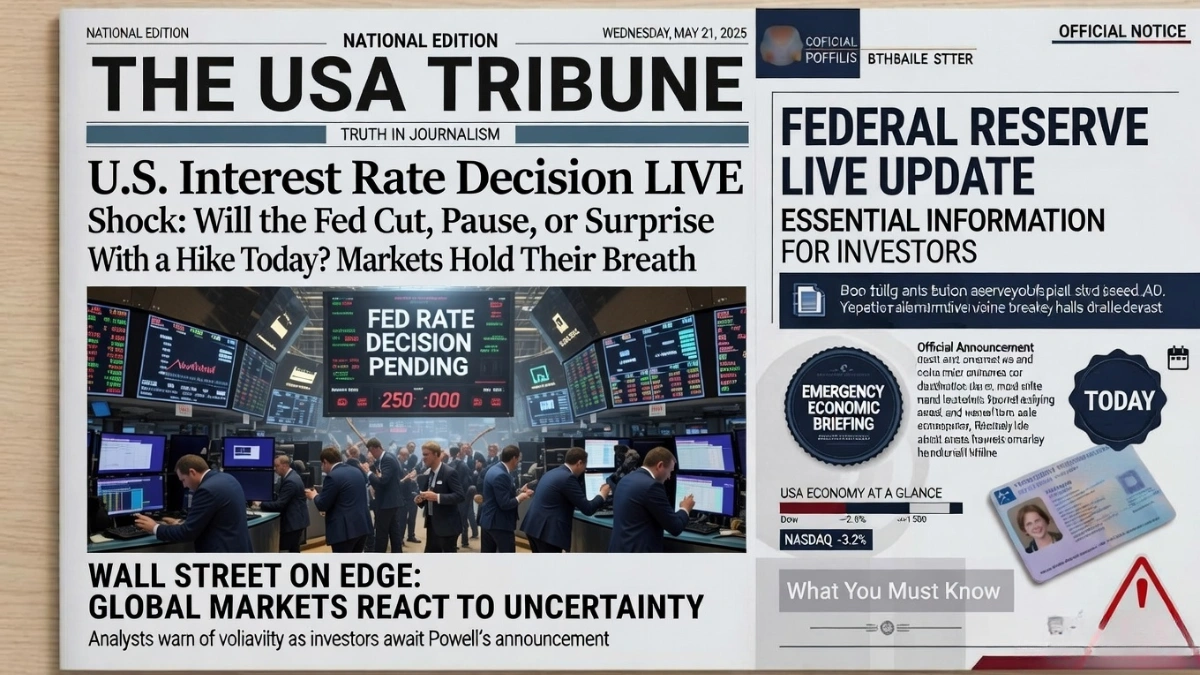
Investors across Wall Street and global markets are locked in as today’s U.S. interest rate decision unfolds. Every word from the Federal Reserve could trigger sharp moves in stocks, bonds, gold, and the dollar. The big question dominating headlines right now is simple but powerful: Is a rate cut coming, or will the Fed hold steady and keep pressure on borrowers?
This decision is not just about financial markets. It affects mortgage rates, credit cards, auto loans, savings accounts, and business investments. Whether you are a trader, homeowner, or everyday consumer, today’s announcement could shape your financial plans for months ahead.
Why Today’s Fed Decision Matters More Than Ever
The Federal Reserve sets the federal funds rate, which influences borrowing costs across the economy. Over the past few years, the Fed aggressively raised rates to combat inflation. Those hikes pushed mortgage rates higher, increased credit card interest, and tightened financial conditions.
Now, as inflation shows signs of cooling but economic growth remains uncertain, the pressure is on policymakers. A rate cut could signal confidence that inflation is under control. A pause could indicate caution. A surprise hike would shock markets and suggest inflation risks are not fully resolved.
The decision is closely watched because it reflects how the Fed views inflation, employment, and overall economic stability.

Rate Cut, Pause, or Hike: What Analysts Expect
Market expectations heading into today’s meeting are divided. Many economists predict the Fed will hold rates steady while signaling potential cuts later in the year. Others believe a small rate cut could arrive if economic data weakens further.
A rate hike appears less likely, but it cannot be completely ruled out if inflation data surprises on the upside. Even without a change in rates, the Fed’s statement and press conference can move markets dramatically.
Investors are especially focused on forward guidance. Any hint about future cuts or concerns about economic slowdown could spark volatility within minutes of the announcement.
Impact on Mortgage Rates and Homebuyers
Mortgage rates are heavily influenced by Federal Reserve policy and bond market reactions. If the Fed cuts rates or signals upcoming reductions, mortgage rates could gradually decline, offering relief to homebuyers and those looking to refinance.
However, if the Fed remains cautious or signals inflation risks, mortgage rates may stay elevated. For buyers waiting on the sidelines, today’s tone could determine whether 2026 becomes a better entry point into the housing market.

Home affordability remains one of the biggest economic challenges, and rate decisions directly affect monthly payments for millions of Americans.
Stock Market Reaction: Volatility Expected
The stock market typically reacts instantly to Fed announcements. A dovish tone suggesting rate cuts often boosts equities, especially growth and technology stocks. A hawkish tone warning of persistent inflation can trigger sell offs.
Major indices like the S&P 500 and the Dow Jones Industrial Average may see sharp swings during and after the press conference.
Investors are also watching bond yields. If yields drop, it usually indicates expectations of easing policy. Rising yields can signal fears of prolonged high rates.
How the Decision Affects Everyday Americans
Beyond Wall Street, today’s rate decision influences everyday financial realities. Credit card interest rates move closely with the federal funds rate. Auto loans, personal loans, and small business financing costs are also affected.

On the positive side, savers may benefit from higher interest rates on savings accounts if the Fed keeps rates elevated. A rate cut, however, could gradually reduce returns on high yield savings accounts.
This balance between borrowing costs and savings returns makes the Fed’s move critical for households planning budgets in 2026.
Key Factors the Fed Is Watching
The Federal Reserve is analyzing multiple economic indicators before making its decision.
• Inflation trends and core price data
• Unemployment rate and job growth reports
• Consumer spending strength
• Wage growth patterns
• Global economic risks and financial stability
These data points shape whether policymakers believe inflation is fully under control or still requires tight monetary policy.
What Happens Next After the Announcement
Immediately after the rate decision, attention shifts to the Fed Chair’s press conference. Markets dissect every sentence for clues about future policy direction. Even if rates remain unchanged, language about economic risks, inflation outlook, or potential easing cycles can redefine market expectations.
Traders also monitor updated economic projections if released, including forecasts for inflation, GDP growth, and unemployment.
For consumers, the impact may take weeks or months to fully reflect in lending rates, but market reactions begin instantly.
Conclusion
Today’s U.S. interest rate decision is more than a routine policy update. It is a defining moment that could influence financial markets, borrowing costs, and economic confidence throughout 2026. Whether the Federal Reserve cuts, pauses, or surprises with a hike, the ripple effects will reach households, investors, and businesses nationwide. Staying informed and prepared for volatility is essential as the next chapter of U.S. monetary policy unfolds.
Disclaimer: This article is for informational purposes only and does not constitute financial advice. Market conditions and policy decisions may change rapidly.